Mosaic Art Floor & Coastal Modern Architecture
At its simplest, a mosaic art floor brings color and pattern right beneath your feet, turning an ordinary walkway into something truly special. These designs use small pieces of tile or stone to build flowing pictures and rich textures outdoors.
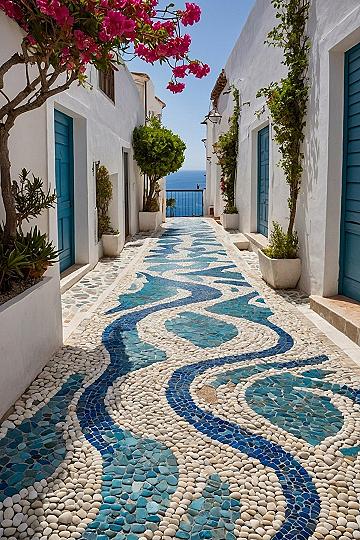

People choose this style because it adds instant personality to courtyards, paths, and entries. Instead of plain concrete or standard paving stones, you get a custom surface that feels full of life and coastal charm.
The secret to making these colorful floors work is matching the tones to your surrounding walls and plants. When the blues and whites of the path echo the sea and sky, the whole space feels balanced and welcoming.
You can easily change the patterns, colors, and layouts to fit your personal taste or the specific size of your yard. Whether you want a simple wave pattern or a detailed picture, the approach adapts to any space.
Let us take a look at five different ways to bring this sunny, Mediterranean-inspired look into your own outdoor living areas.
#1 Designing Walkways with Coastal Mosaic Stone Patterns
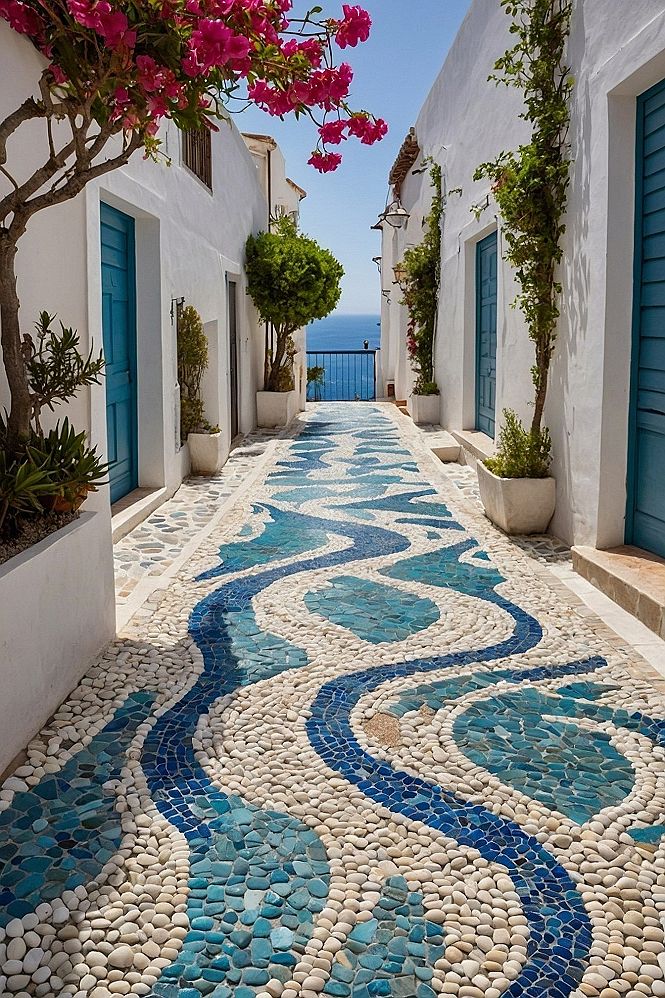
A pebble mosaic pathway uses smooth natural stones set into mortar to form durable outdoor flooring. By mixing white stones with shades of blue, you can create flowing wave designs that mimic ocean currents. This technique turns plain pathways into custom art pieces that connect your outdoor spaces directly to a relaxed coastal mood.
When planning your stone pathway, lay out your pattern on flat ground before setting anything in mortar. This lets you test the curves and color blending easily. Seal the finished surface to protect the stones from weather damage and heavy foot traffic so the colorful designs stay bright for years.
#2 Creating Seamless Poolside Transitions with Glass Tile Mosaics
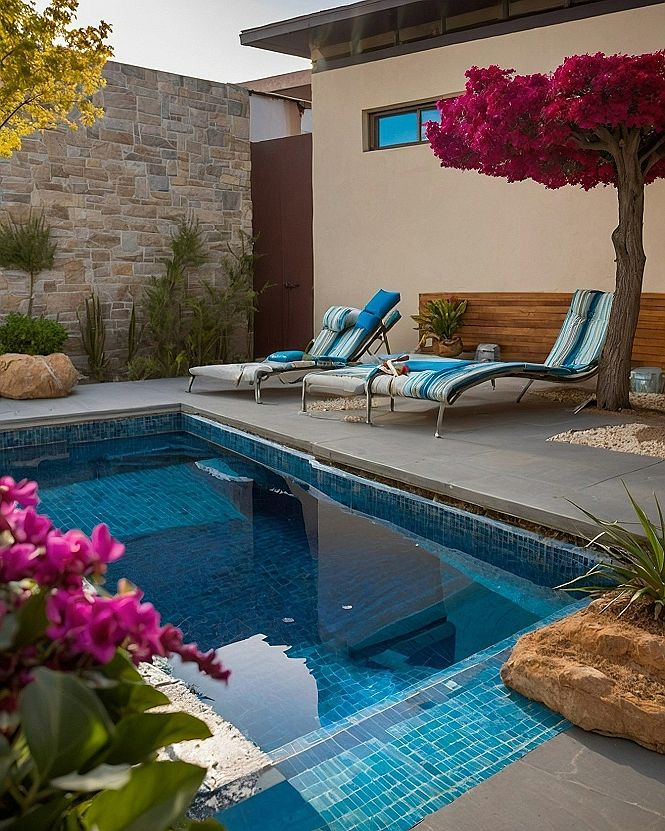
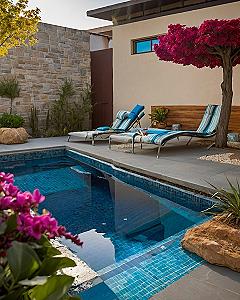
Using small glass mosaic tiles inside a pool works well because the individual pieces catch natural sunlight and reflect shifting water tones throughout the day. This approach links the swimming area directly to surrounding concrete or stone decks, making outdoor living spaces feel unified and carefully planned.
Homeowners renovating backyards often choose this style to reduce visible grout lines and simplify routine pool maintenance. You can expect a brighter, cleaner aesthetic that matches modern coastal architecture without requiring complex upkeep or specialized cleaning routines over the years.
#3 Selecting Mosaic Floor Accents for Coastal Entryways
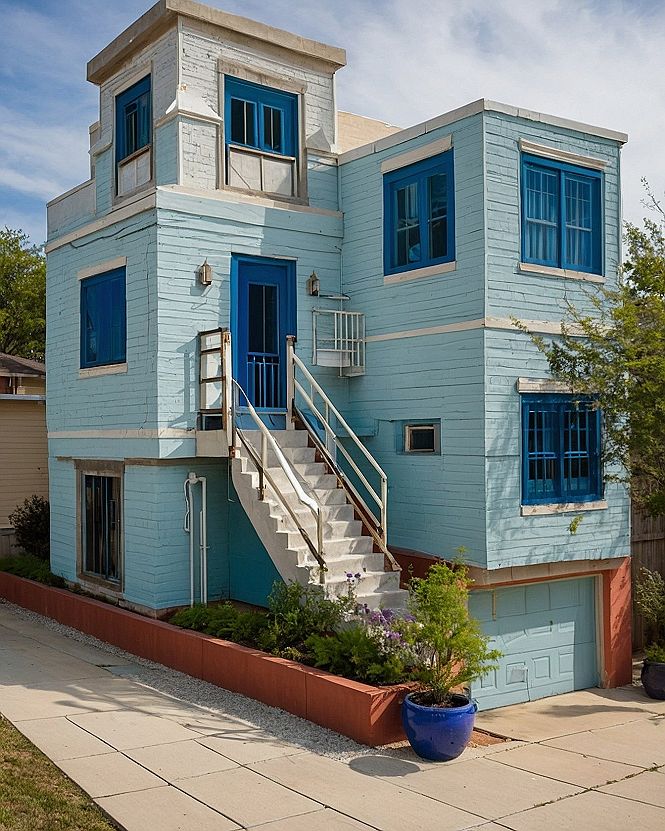
When you want to anchor an entryway with coastal style, start by picking a mosaic floor pattern that handles heavy foot traffic. Unglazed ceramic tiles and natural stone offer reliable grip when shoes are wet from the beach. Focus on simple geometric shapes or gentle wave motifs that guide visitors toward the door without overwhelming the room.
To fit different budgets and skill levels, consider mixing pre-assembled mosaic sheets with a few hand-cut accent tiles. You can buy neutral mesh-backed squares for the main surface and insert colorful glass pieces near the threshold for a custom look. This approach keeps installation manageable while giving your entryway a unique coastal finish.
Which architectural style speaks to you?
#4 Maintaining Large Circular Mosaic Courtyards and Patios

When dealing with massive circular layouts, sealing grout lines properly is the most important step for longevity. Coastal environments bring salt and moisture that can degrade mortar over time. Applying a penetrating sealer right after installation blocks water absorption and prevents salt crystals from forming inside the tiny gaps between tiles.
Routine upkeep for big outdoor mosaic floors involves simple sweeping and gentle washing with a mild, pH-neutral soap. Avoid harsh chemical cleaners that strip away protective sealants. Inspect the surface twice a year for any loose tiles caused by shifting soil or temperature changes, and fix minor gaps immediately to stop water damage from spreading.
#5 Adding Sunny Yellow Door Accents to Coastal Homes
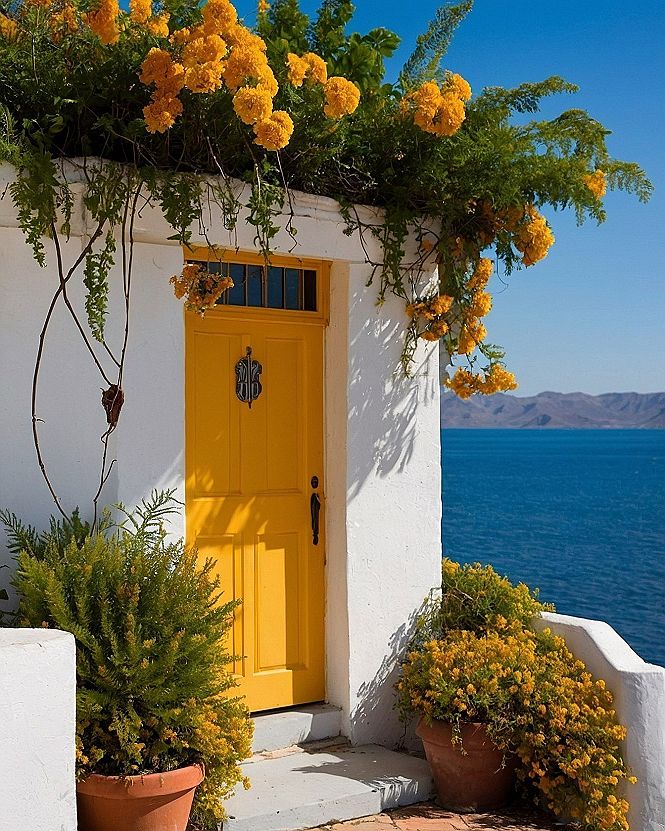
I really recommend bringing a bright yellow door into your coastal architectural plans because it instantly warms up cool white stucco walls. This cheerful color choice mimics coastal sunlight and creates a very welcoming focal point for visitors.
If a bold primary yellow feels too bright for your taste, try using a softer mustard or butterscotch shade instead. It gives you the same sunny coastal vibe while blending a bit more quietly into natural seaside surroundings.
What's Your Architecture Personality?
Tap the look that speaks to you most:
Leave a Comment